Last January I emptied the coffee tin on the shelf above my bench, walked the forty-two dollars inside it to the bank on Agricola Street, and decided that for twelve months I would not touch cash. No bills, no coins, no folded twenty in the glovebox for emergencies. Everything leaving the shop would go by card or e-transfer, and everything coming in would arrive the same way. It was not a protest or a budgeting challenge. A customer had asked, half joking, whether I still took cash for cutting boards, and I realized I could not remember the last time I had.
I expected the year to teach me something about spending. Mostly it taught me about waiting.
"Cash had always hidden the part of money that takes time. Once it was gone, I could see every day a payment spent in transit, and I started planning around those days instead of pretending they were not there."
The Speed Nobody Mentions
The first surprise was how fast some money moves. A woman from Dartmouth paid for a walnut side table by e-transfer while she was still standing in the shop, and the notification reached my phone before she had her coat buttoned. A software client I still do occasional contract work for switched to the same method, and an invoice I used to chase for a month became a message that arrived within minutes of him saying the work was accepted. For someone who spent his first two years in the workshop living on net-thirty terms, that felt close to a small miracle.
The second surprise was how slow other money is. In March I returned a router that had arrived with a cracked base. The store took it back without argument, apologized, and told me the refund would appear on my card in five to seven business days. It took nine. A deposit I had paid on a lumber order that fell through took eleven days to come home, and I phoned twice. Nothing was wrong in either case. The money was simply moving through a system with no particular reason to hurry, because it was moving away from the people holding it.
That was the first real lesson of the year. Money tends to travel quickly toward a business and slowly away from it, and the gap is not an accident.
What Waiting Did to the Ledger
When I paid cash, a purchase was finished the moment it happened. With cards and transfers, a purchase has a life afterwards: pending, posted, disputed, refunded, reversed. By April I had stopped trusting my banking app as a description of where I actually stood, because it showed what had settled, not what was still on its way.
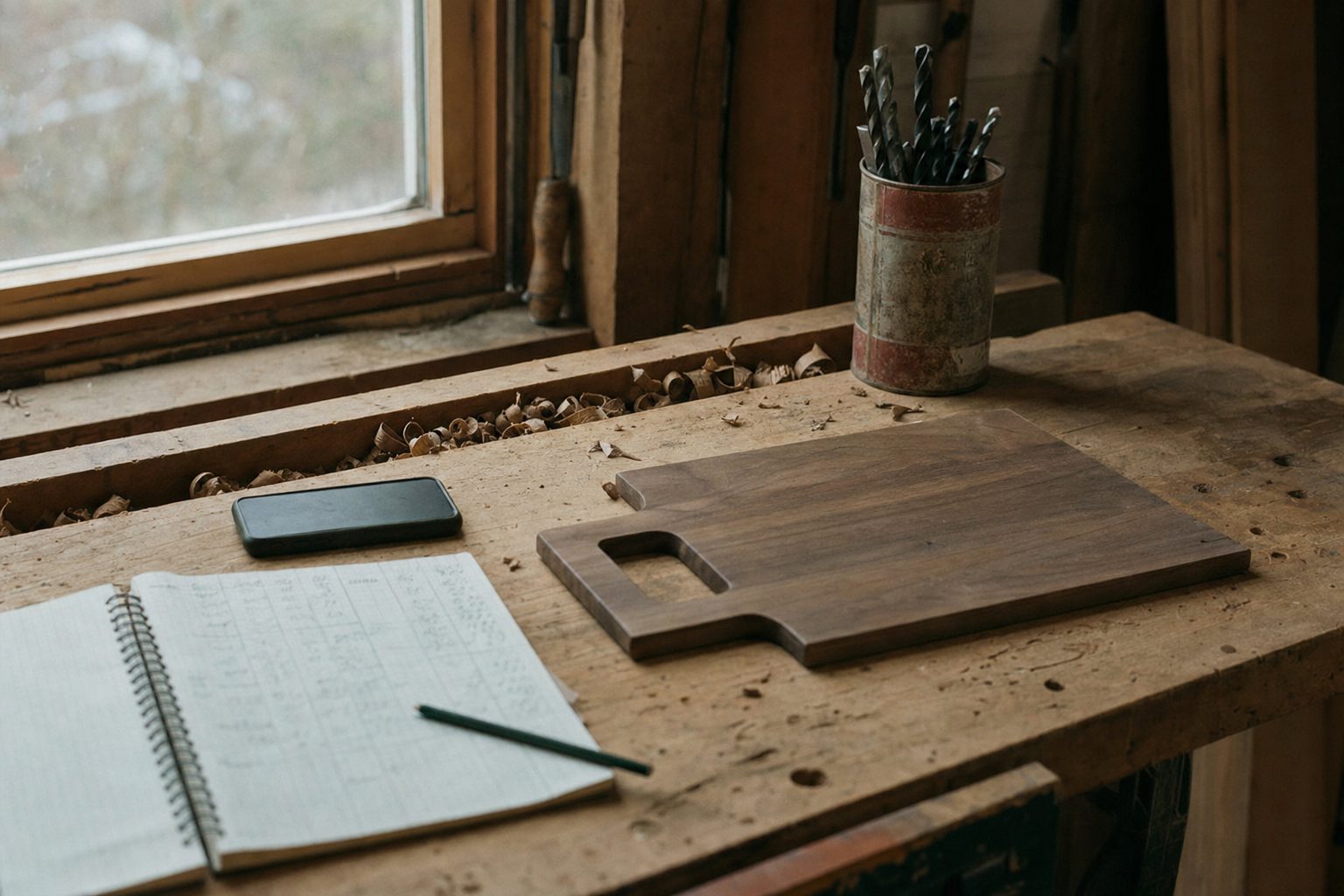
So I started keeping a second ledger, in pencil, in the same notebook where I keep cut lists. One column for money I was owed and the date it was promised, one for money owed back to me and the date it actually arrived. It sounds fussy. It turned out to be one of the more useful things I have done. I wrote in an earlier piece about the workshop that materials do not care about your intentions. Money in transit is the same. A refund that has been promised is not a refund until it lands, and planning as though it already has is how a tight month becomes a bad one.
The ledger also showed me patterns I would never have noticed otherwise. Suppliers who said next day usually meant next day. Large retailers who said three to five days usually meant seven. A couple of customers who paid instantly for small jobs went quiet for weeks on large ones. None of it was hidden. Cash had simply let me skip writing it down.
Speed Has Become Something People Compare
Around the autumn I noticed I was not the only one paying attention. Friends started mentioning which banks posted transfers fastest, which marketplaces held seller funds the longest, and which apps paid out the same day instead of making you wait until Friday. Payments Canada's latest research on how Canadians pay found that more than half of us find the idea of real-time payments appealing, mostly for the speed. Payout time has quietly become something people shop on.
It shows up in places I would not have expected. A friend who plays the occasional hand of online poker told me withdrawal times are now one of the first things players check, and a search for fast payout casinos Canada turns up pages that rank sites by how many hours a cash-out takes rather than by the size of the welcome offer. One roundup of instant withdrawal casinos he showed me laid out processing times method by method, e-transfer included, in the same plain columns I had been keeping in my notebook. Whatever you think of gambling, the instinct behind that comparison is sound: before you hand money to anyone, find out how long it takes to get it back.
What I Kept
The year ended in January. I did not go back to cash, partly out of habit and partly because the coffee tin is now full of drill bits. But I kept the pencil ledger, and I kept the habit of asking one question before any money leaves the shop: if this has to come back, how long will it take?
That question has changed more than my bookkeeping. I take deposits differently now, and I return them faster than I used to, because I know what it feels like to wait eleven days on a lumber yard. I tell customers exactly when their payment will clear and exactly when mine will reach them, and they seem to trust me more for it. Julia Chen wrote recently about setting your rules before the situation starts, and this feels like a small version of the same idea. The time to learn how slowly money comes home is before you send it out.
There is a short discussion guide built around this essay in the community section, for anyone who wants to try the ledger with a partner or a reading group.
Cash let me believe money was a thing. A year without it convinced me money is a process, with a beginning, a middle and an end, and that most of the stress I used to feel about it lived in the middle, where I could not see it. Now I can. That turned out to be most of what I needed.
Author
Marcus Cole
Halifax, NS
Marcus Cole spent eleven years as a software engineering lead before leaving to learn woodworking in Halifax's north end. He writes about the intelligence stored in physical skill, what craft demands, and the particular honesty of materials that push back.
More from Marcus Cole